

Most people know they’re supposed to visit the dentist every six months. Far fewer actually understand what happens during those thirty or forty minutes in the chair — and why it matters beyond just getting their teeth cleaned.
If you’ve ever sat under those bright lights wondering exactly what your dentist is looking at, checking for, and writing down on that clipboard, you’re not alone. And the answer is more thorough — and more important — than most patients realize.
A modern dental checkup is not simply a polish and a reminder to floss more. It’s a systematic health assessment that can detect problems ranging from early cavities to gum disease, bite disorders, and even signs of oral cancer — often before you experience a single symptom.
This guide walks you through exactly what a dentist looks for during a checkup, step by step, so you walk into your next appointment informed, prepared, and with zero surprises.
What Is a Dental Checkup, Really?
A dental checkup — also called a dental examination or oral health assessment — is a structured clinical evaluation of your teeth, gums, jaw, soft tissues, and overall oral health. It typically includes two components: the examination itself (conducted by the dentist) and a professional cleaning (usually performed by a dental hygienist).
The examination portion is diagnostic. The dentist is actively looking for evidence of disease, damage, dysfunction, or early warning signs of future problems. The cleaning removes accumulated plaque and tartar that daily brushing and flossing can’t fully eliminate.
Together, these two components make a routine checkup one of the most cost-effective healthcare investments you can make — catching small problems before they become expensive, painful, or medically significant.
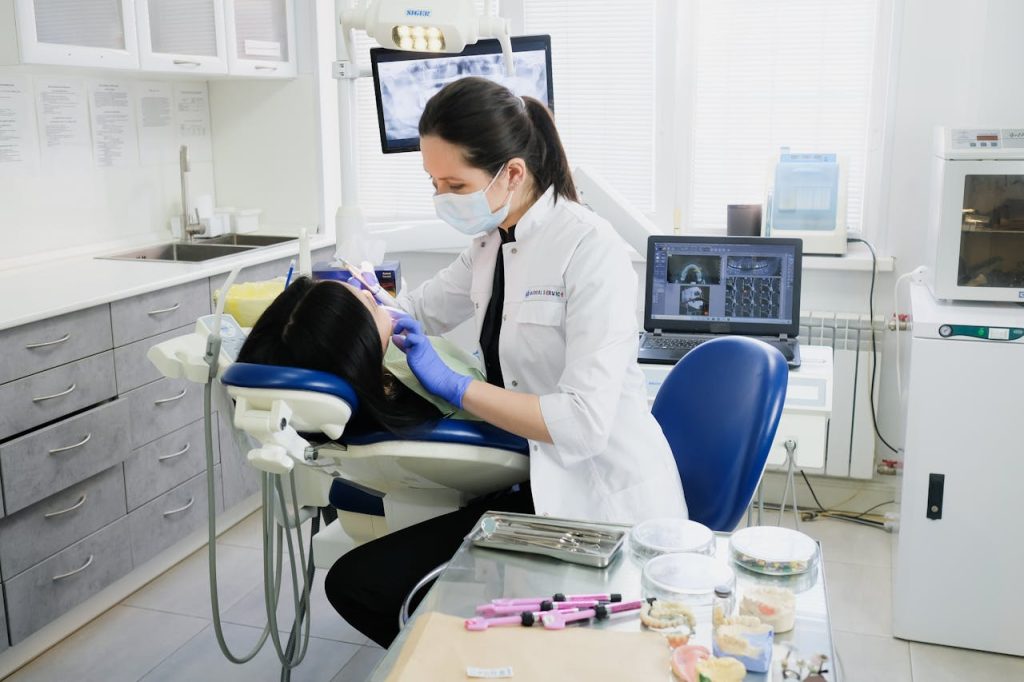
Step-by-Step: What Your Dentist Is Looking For
1. Medical History Review
Before a single instrument touches your mouth, your dentist reviews — or asks you to update — your medical history. This isn’t bureaucratic box-ticking. It’s clinically essential.
Many systemic health conditions directly affect oral health, and vice versa. Diabetes, for example, both increases risk of gum disease and makes it harder to manage. Certain medications cause dry mouth, which significantly elevates cavity risk. Heart conditions may affect which treatments or medications are safe to use during dental procedures.
Your dentist will ask about:
- Any new diagnoses or health changes since your last visit
- Current medications, including supplements and over-the-counter drugs
- Allergies, particularly to antibiotics or latex
- Any dental concerns, pain, or sensitivity you’ve noticed
- Lifestyle factors such as smoking, alcohol use, or dietary changes
Being thorough and honest here sets the foundation for everything that follows.
2. Visual Examination of the Teeth
This is the part most patients picture when they think of a dental exam — the dentist peering into your mouth with a small mirror and a metal instrument called an explorer.
What they’re actually doing is methodically evaluating every visible surface of every tooth, looking for:
Cavities (Dental Caries) Tooth decay doesn’t always start as a visible dark spot. In its early stages, decay appears as a subtle change in the texture or translucency of enamel. Your dentist uses the explorer to gently probe areas of concern, since decayed enamel feels softer and “stickier” than healthy tooth structure. Early-stage cavities caught at this point can sometimes be managed with fluoride treatment or simple monitoring rather than drilling.
Existing Restorations Fillings, crowns, bridges, and veneers don’t last forever. Your dentist checks each existing restoration for cracks, gaps at the margins, signs of secondary decay beneath a filling, or wear that might indicate the restoration needs attention.
Cracks and Fractures Cracked teeth are surprisingly common and notoriously difficult to diagnose — they don’t always show on X-rays and can be invisible to the naked eye until they’re serious. Your dentist may use a special light, dye, or a bite stick (asking you to bite down on a small device) to detect hairline fractures before they propagate.
Enamel Erosion Thinning or pitting enamel often signals acid exposure — from diet (frequent citrus, carbonated drinks), acid reflux, or in some cases eating disorders. It creates distinct visual patterns your dentist is trained to recognize.
Tooth Wear Abnormal wear patterns on the biting surfaces of teeth are a red flag for bruxism (teeth grinding), often unconscious and often occurring at night. This prompts conversation about a custom night guard before the damage becomes severe.
3. Gum and Periodontal Assessment
Gum disease affects a substantial portion of adults worldwide, and its early stage — gingivitis — is almost entirely symptom-free. This makes the periodontal examination one of the most important parts of a checkup.
Your dentist or hygienist uses a thin, calibrated probe to gently measure the depth of the pockets between your gums and teeth at multiple points around each tooth. These measurements are recorded in millimeters:
- 1–3mm: Healthy gum attachment — no action needed
- 4mm: Borderline — monitoring or improved home care recommended
- 5mm and above: Periodontal disease is likely present — deeper treatment may be needed
Beyond pocket depth, your dental team is observing gum color, texture, and bleeding response. Healthy gums are firm and pale pink. Inflamed gums appear red, puffy, and bleed easily when probed — a sign that bacteria have taken hold and inflammation is active.
Why this matters beyond your mouth: The scientific link between periodontal disease and systemic health is well-established and growing. Chronic gum inflammation is associated with increased cardiovascular risk, difficulty managing blood sugar in diabetic patients, and adverse pregnancy outcomes. A periodontal assessment at your dental checkup is, in a real sense, a window into broader health.
4. Oral Cancer Screening
This is the component of a dental checkup that most patients don’t know is happening — and it may be the most important one for your life.
Oral cancer affects tens of thousands of people each year, and survival rates are dramatically better when it’s caught early. Your dentist performs a systematic screening at every checkup, examining:
- The lips (inner and outer surface)
- The tongue (top, sides, and underside — where many cancers begin)
- The floor of the mouth
- The roof of the mouth (hard and soft palate)
- The cheeks and inner cheek tissue
- The back of the throat
- The neck and lymph nodes (checked externally by palpation)
They’re looking for anything that doesn’t belong: unusual white or red patches, sores that haven’t healed within two weeks, unexplained thickening of tissue, or areas that look or feel different from the surrounding tissue.
Some dental offices use additional screening tools — specialized lights or dyes that make abnormal cells more visible — particularly for higher-risk patients. If you smoke, drink alcohol regularly, or have had previous oral lesions, it’s worth asking whether enhanced screening is appropriate for you.
5. Bite and Jaw Evaluation
Your dentist assesses how your upper and lower teeth come together — your occlusion — as well as the function and health of your temporomandibular joints (TMJ), the hinges on either side of your jaw.
Signs of bite problems or TMJ dysfunction include:
- Uneven wear on specific teeth
- Clicking, popping, or pain in the jaw joint
- Difficulty opening or closing the mouth fully
- Jaw deviation to one side when opening
- Reported headaches or facial pain
Detecting bite dysfunction early allows for intervention — often as straightforward as a custom night guard or minor occlusal adjustment — before it progresses to significant joint damage or extensive tooth wear.
6. Dental X-Rays
X-rays extend the dentist’s vision to where no clinical examination can reach: between teeth, beneath the gum line, inside teeth, and within the jawbone itself.
Depending on your age, dental history, and risk profile, your dentist may take:
- Bitewing X-rays: The most common type, showing the crowns of upper and lower back teeth simultaneously — excellent for detecting decay between teeth and changes in bone level
- Periapical X-rays: Show a tooth from crown to root tip, used to assess root health, bone support, and the tissues surrounding the root
- Panoramic X-rays: A single image showing all teeth, the full jaw, sinuses, and jaw joints — typically taken every few years or when a comprehensive overview is needed
X-ray frequency is tailored to the individual. Patients with a history of decay or gum disease may need annual bitewings. Low-risk patients may need them only every two to three years. Modern digital X-ray systems use a small fraction of the radiation of older film-based systems, making them extremely safe.
7. Professional Cleaning (Prophylaxis)
Even the most diligent home care routine leaves some plaque in hard-to-reach areas, and over time plaque hardens into tartar (calculus) — a mineralized deposit that cannot be removed by brushing or flossing.
During the cleaning portion of your visit, the hygienist uses specialized instruments to:
- Scale (remove) tartar deposits from tooth surfaces and below the gum line
- Polish teeth with a slightly abrasive paste to remove surface stains and smooth enamel
- Floss professionally between teeth to clean contact areas
For patients with early gum disease, a deeper cleaning procedure called scaling and root planing may be recommended — this involves cleaning below the gum line more extensively under local anesthesia.
What Happens After the Examination?
After the examination and cleaning, your dentist will sit down with you to discuss findings. This typically covers:
- What, if anything, was detected that needs attention
- A prioritized treatment plan if any issues were found, with options and cost estimates
- Personalized home care recommendations (specific brushing technique, floss type, rinse suggestions, dietary modifications)
- The recommended interval for your next visit
If cavities, gum disease, or other issues were found, treatment appointments are typically scheduled before you leave.
How Often Should You Have a Dental Checkup?
The traditional guideline of every six months is appropriate for most adults — and for good reason. Six months is roughly the interval at which tartar accumulates to levels that significantly increase disease risk, and frequent enough to catch decay and gum disease in their earliest, most treatable stages.
However, this is not a universal prescription. Your dentist may recommend:
- Every 3–4 months for patients with active gum disease, high decay risk, or conditions like dry mouth or diabetes
- Every 12 months for low-risk patients with excellent oral health and home care habits
- More frequent monitoring during orthodontic treatment, pregnancy, or cancer therapy
The key is individualized frequency based on your actual risk profile — a conversation worth having directly with your dentist.
Tips to Get the Most From Your Dental Checkup:
- Update your medical history honestly — every medication and new diagnosis matters
- Bring a list of questions — your checkup is an opportunity for expert guidance, not just treatment
- Mention any symptoms — even vague ones like occasional sensitivity, jaw soreness, or a sore that’s been there a while
- Don’t skip the cleaning even if you’re tempted to ask for “just the exam” — the cleaning is clinically meaningful, not optional
- Ask what you can do differently at home — personalized advice from someone who just examined your mouth is far more valuable than generic brushing tips
Frequently Asked Questions:
Q 1. Is a dental checkup painful?
For most patients, a routine checkup is entirely comfortable. The examination involves light probing and the cleaning may cause mild sensitivity, particularly if tartar buildup is significant or gums are inflamed. If you experience anxiety about dental visits, let your dentist know — most practices have accommodations ranging from a gentle, step-by-step approach to nitrous oxide sedation.
Q 2. What’s the difference between a dental exam and a dental cleaning?
A dental exam is the diagnostic assessment performed by the dentist — evaluating teeth, gums, bite, soft tissues, and reviewing X-rays. A dental cleaning is a therapeutic procedure, typically performed by the hygienist, that removes plaque and tartar. Both are usually done at the same appointment, but they are distinct services with different clinical purposes.
Q 3. Can a dentist tell if you haven’t been flossing?
Yes — quite easily. Gum tissue that isn’t regularly cleaned between teeth becomes inflamed, and it bleeds readily when probed. The pattern of inflammation and tartar buildup between teeth versus on exposed surfaces tells a clear story about flossing habits. More importantly than being “caught,” the examination gives your dental team specific, useful information for tailoring their recommendations to you.
Q 4. What if the dentist finds a problem?
Finding a problem at a checkup is genuinely good news — it means the issue was caught before it became bigger, more painful, or more costly. Your dentist will explain what was found, discuss all available treatment options, and help you prioritize based on urgency and your situation. Nothing is typically done without your understanding and consent.
Q 5. Do dental X-rays have to be taken at every visit?
No. X-ray frequency is determined by your individual risk factors and dental history. Low-risk adults may need bitewing X-rays every two to three years. Higher-risk patients may need them annually. Your dentist will recommend what’s clinically appropriate, and you’re always entitled to ask why a particular X-ray is being recommended.
Conclusion: Your Checkup Is More Than a Cleaning
A dental checkup is one of the most comprehensive preventive health assessments available in primary care — and one of the most underestimated. In thirty to forty minutes, your dental team screens for tooth decay, gum disease, oral cancer, bite disorders, and the oral manifestations of systemic conditions, often catching problems that have no symptoms yet and are far simpler to address in their early stages.
The cost of a routine checkup — in time, money, and mild inconvenience — is trivially small compared to the cost of the problems it prevents. A filling costs a fraction of a root canal. A root canal costs a fraction of an extraction and implant. And treating oral cancer caught at Stage 1 is dramatically more successful than treating it at Stage 4.
Don’t wait until something hurts to make the appointment. That’s precisely the philosophy a dental checkup is designed to make unnecessary.