

Not knowing what to expect is one of the biggest reasons people put off booking a dental checkup. A clear picture of what actually happens in the chair can turn that hesitation into confidence. This guide walks through every stage of a routine visit; from the moment you sit down to the moment your next appointment is booked.
Dental anxiety often comes from uncertainty rather than the appointment itself. Understanding each step, and why your dentist does it, removes much of that fear and helps you get more out of the visit. It also makes it easier to ask questions and raise concerns as they come up.
Below, we break down exactly what a dental checkup involves, how NHS and private checkups differ, and what affects how often you’ll need to come back. We also cover comfort, cost, and what happens if your dentist finds a problem.
A dental checkup involves a review of your medical and dental history, a visual examination of your teeth, gums, and soft tissues, an oral cancer screening, X-rays if clinically needed, and a scale and polish if required. Your dentist then discusses any findings, agrees on next steps, and recommends when your next checkup should be. Most routine checkups take around 15 to 30 minutes.
The exact steps can vary slightly between NHS and private practices, though the core clinical process stays the same.
What Does a Dental Checkup Actually Involve?
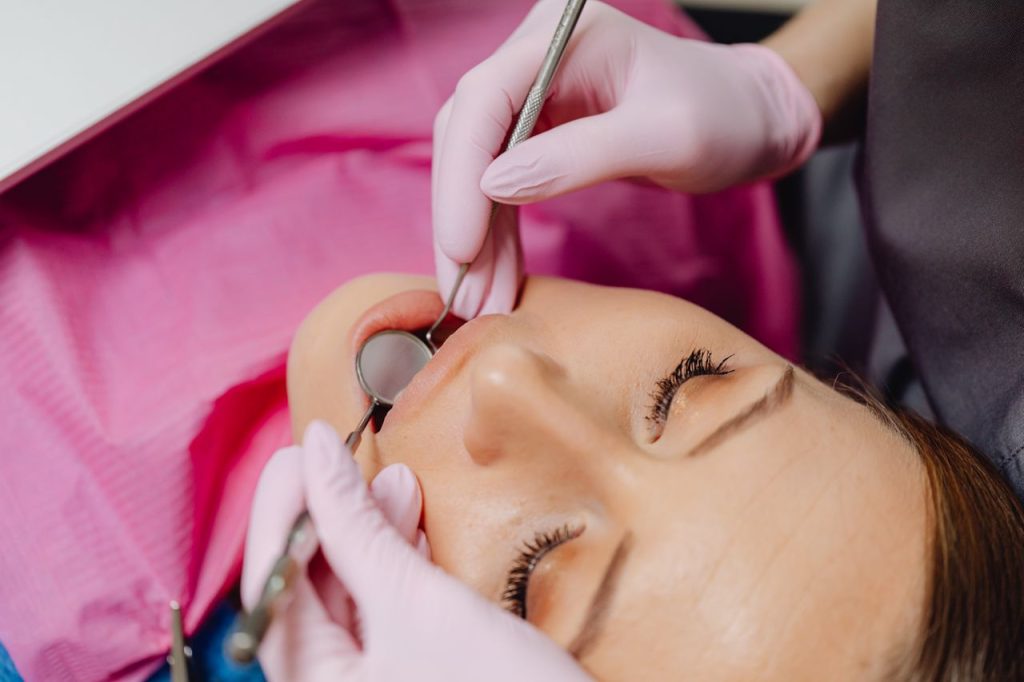
A dental checkup is a preventive appointment designed to catch problems early and keep your mouth healthy, not just to treat existing pain. It covers your teeth, gums, jaw, and the soft tissues inside your mouth.
Checkup Steps at a Glance
- Medical and dental history review: Your dentist asks about any symptoms, medications, general health changes, and habits like smoking or diet since your last visit.
- Visual examination: Each tooth is checked for decay, cracks, and wear using a mirror, probe, and good lighting.Gum health assessment: Your gums are gently checked for signs of inflammation, bleeding, or pocket depth that could indicate gum disease.
- Oral cancer screening: The lips, tongue, cheeks, and throat are examined for any unusual lumps, sores, or colour changes.
- X-rays and scale and polish, if needed: X-rays are taken only when clinically necessary, and a scale and polish removes plaque or tartar buildup where present.
Comparing Your Options: Which Checkup Suits You Best?
Not every checkup looks the same. The right type depends on whether you’re registered with an NHS or private practice, and whether it’s your first visit or a routine recall.
NHS Dental Checkup
An NHS checkup covers the essential clinical examination: your teeth, gums, and soft tissues, plus X-rays and a scale and polish if your dentist judges these clinically necessary. It’s charged as a Band 1 course of treatment, currently £27.90, and typically takes around 15 to 20 minutes. It does not include purely cosmetic requests, which fall outside NHS-funded care.
Private Dental Checkup
A private checkup follows the same clinical process but often allows more appointment time, around 30 to 45 minutes, for detailed discussion and preventive advice. Private practices can also offer additional services during the same visit, such as cosmetic consultations or same-day hygienist appointments. Costs vary by practice and are set independently of the NHS banding system.
New Patient Checkup
A new patient checkup takes longer than a routine recall because your dentist is building a full picture of your dental history for the first time. Expect a more detailed conversation about past treatment, plus baseline X-rays and charting so future visits have something to compare against. This appointment sets the recall interval that later checkups will follow.
Comparison Table: NHS vs Private vs New Patient Checkup
| Feature | NHS Checkup | Private Checkup | New Patient Checkup |
| Typical length | 15–20 minutes | 30–45 minutes | 45–60 minutes |
| Cost basis | Fixed Band 1 charge (£27.90) | Set by individual practice | Set by individual practice |
| X-rays included | If clinically needed | If clinically needed | Baseline X-rays usually included |
| Best suited for | Routine recall, NHS-registered patients | Patients wanting more time or added services | First visit to a new practice |
How Often Should You Have a Checkup, and What Affects the Interval?
There’s no single fixed interval that applies to everyone. National guidance recommends a risk-based approach instead of a blanket six-month rule.
Factors That Affect Your Recall Interval
NICE guideline CG19 recommends that recall intervals be tailored to each patient’s individual risk of dental disease, rather than applied as a fixed schedule. In practice, this generally means checkups every 3 to 24 months, depending on your oral health, medical history, and past treatment needs.
Everyday Habits That Extend Time Between Checkups
Brushing twice daily with fluoride toothpaste, flossing regularly, and limiting sugary food and drink all reduce your risk of decay and gum disease between visits. Attending every recommended appointment, rather than skipping ones that feel unnecessary, also helps your dentist catch small issues before they become bigger, more complex treatment.
Addressing Concerns Around Pain, Anxiety, and Cost
The barriers that keep people from booking a checkup are rarely about the appointment itself. They’re usually about discomfort, fear, or not knowing what it will cost.
Managing Pain and Comfort
A routine checkup is a visual and diagnostic examination, so it isn’t painful in the way that treatment like a filling can be. If a scale and polish is needed, some patients notice mild sensitivity around the gumline, which settles quickly afterward.
Support for Anxiety or Hesitation
Telling your dental team about anxiety before the appointment starts allows them to adjust their pace and explain each step as they go. You can ask them to pause or stop at any point during the examination, and this request will always be respected.
Financial Transparency and Payment Options
An NHS checkup currently costs £27.90 as a Band 1 charge, and you’ll only ever pay once per complete course of treatment, even across multiple visits. Our general dentistry team can talk you through private pricing and payment options if you’d prefer a longer private appointment.
Why Patients Across Twickenham Choose Dr Sunny Cosmetic Dentist?
Patients across Twickenham choose Dr Sunny Cosmetic Dentist for checkups that feel thorough without feeling rushed. We take time to explain what we’re checking and why, which patients consistently tell us makes the appointment far less stressful.
Being based locally means it’s simple to book a convenient time and to come back quickly if anything needs following up. For anyone who has avoided the dentist for a while, that combination of clear communication and easy access is often what makes booking that first appointment feel manageable.
FAQs – Frequently Asked Questions
Q 1: How long does a dental checkup take?
A routine checkup typically takes 15 to 30 minutes, though a new patient appointment may take up to an hour. The exact time depends on whether X-rays or a scale and polish are needed.
Q 2: Will I need X-rays at every checkup?
No. X-rays are only taken when your dentist judges them clinically necessary, not as a routine part of every visit. Your dentist will explain why an X-ray is recommended if one is needed.
Q3. Does a checkup include teeth cleaning?
A scale and polish is included if your dentist finds plaque or tartar buildup that needs removing, but it isn’t automatic at every checkup. A checkup is primarily an examination, with cleaning added only where clinically necessary.
Q4. What happens if my dentist finds a problem?
Your dentist will explain what they’ve found and discuss the treatment options available, including what can be done on the NHS versus privately. You’ll be given a written treatment plan and cost estimate before anything further goes ahead.
Q5. How often should I go for a checkup?
This depends on your individual risk of dental problems, and your dentist will recommend an interval based on your oral health. Some patients need checkups every 3 months, while others with good oral health may only need one every 24 months.
Q6. Is a dental checkup free on the NHS?
No, adults in England pay a Band 1 charge of £27.90 for an NHS checkup unless they qualify for an exemption. Certain groups, including children, pregnant women, and some benefit recipients, receive NHS dental care free of charge.
Conclusion
A dental checkup is a straightforward, preventive appointment built around examination, early detection, and honest advice, not just treatment. Knowing what each step involves, from the history review to the oral cancer screening, can make the whole visit feel far less daunting. The team at Dr Sunny Cosmetic Dentist in Twickenham keeps every step clear and unhurried, whether it’s your first visit or your tenth. If it’s been a while since your last checkup, now is a good time to book one.